What Should Not Be Cooked in an Air Fryer
 0
0
 0
0
I’ve owned four different air fryers over the past six years, and I’ve ruined at least a dozen meals figuring out what these machines are terrible at. Air fryers get marketed like they can replace your oven, stovetop, and deep fryer all at once. They can’t. The compact size and aggressive fan speed that make air fryers so good at crisping wings turn into liabilities the moment you feed them the wrong ingredients.
This isn’t a list of vague warnings. It’s a rundown of specific foods that go wrong in an air fryer, why they fail, and what to use instead. Skip these mistakes and you’ll save yourself smoke alarms, ruined dinners, and a basket that smells like burnt cheese for a week.
Wet Batters and Loose Coatings
Anything dipped in a thin, wet batter is a disaster waiting to happen in an air fryer. Think classic beer-battered fish, tempura, or corn dogs dunked in liquid cornmeal mix.
Deep fryers work because the food is fully submerged in hot oil, which sets the batter instantly. Air fryers rely on circulating hot air, and that air blows wet batter right off the food before it has a chance to set. You end up with a gloopy mess stuck to the basket and a pile of naked chicken sitting in the middle.
If you want that fried texture, use a dry breading instead, like flour, egg, then panko or breadcrumbs. Dry coatings crisp up beautifully because there’s nothing for the fan to displace.
Leafy Greens and Delicate Vegetables
Kale chips are the exception that everyone points to, and even those need careful handling. Beyond kale, most leafy greens and light vegetables get destroyed by an air fryer’s airflow.
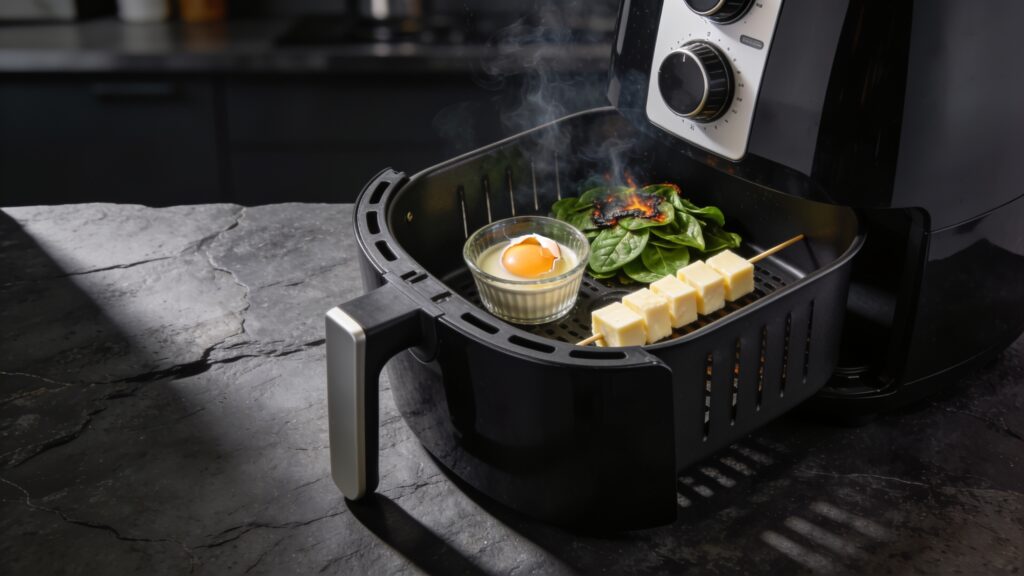
Spinach, arugula, and thin lettuce leaves are light enough that the fan simply blows them around the basket instead of cooking them evenly. They either fly up into the heating element and burn instantly, or they shrivel into inedible flakes before the rest of your meal finishes cooking.
Foods With Excess Liquid or Batter Runoff
Soups, Stews, and Sauces
This one seems obvious, but I’ve seen people try to “crisp up” leftover stew in an air fryer basket. Air fryers have no way to contain liquid. It drips through the perforated basket into the drawer below, burns onto the heating element, and fills your kitchen with smoke.
Cheese-Heavy Dishes Without Structure
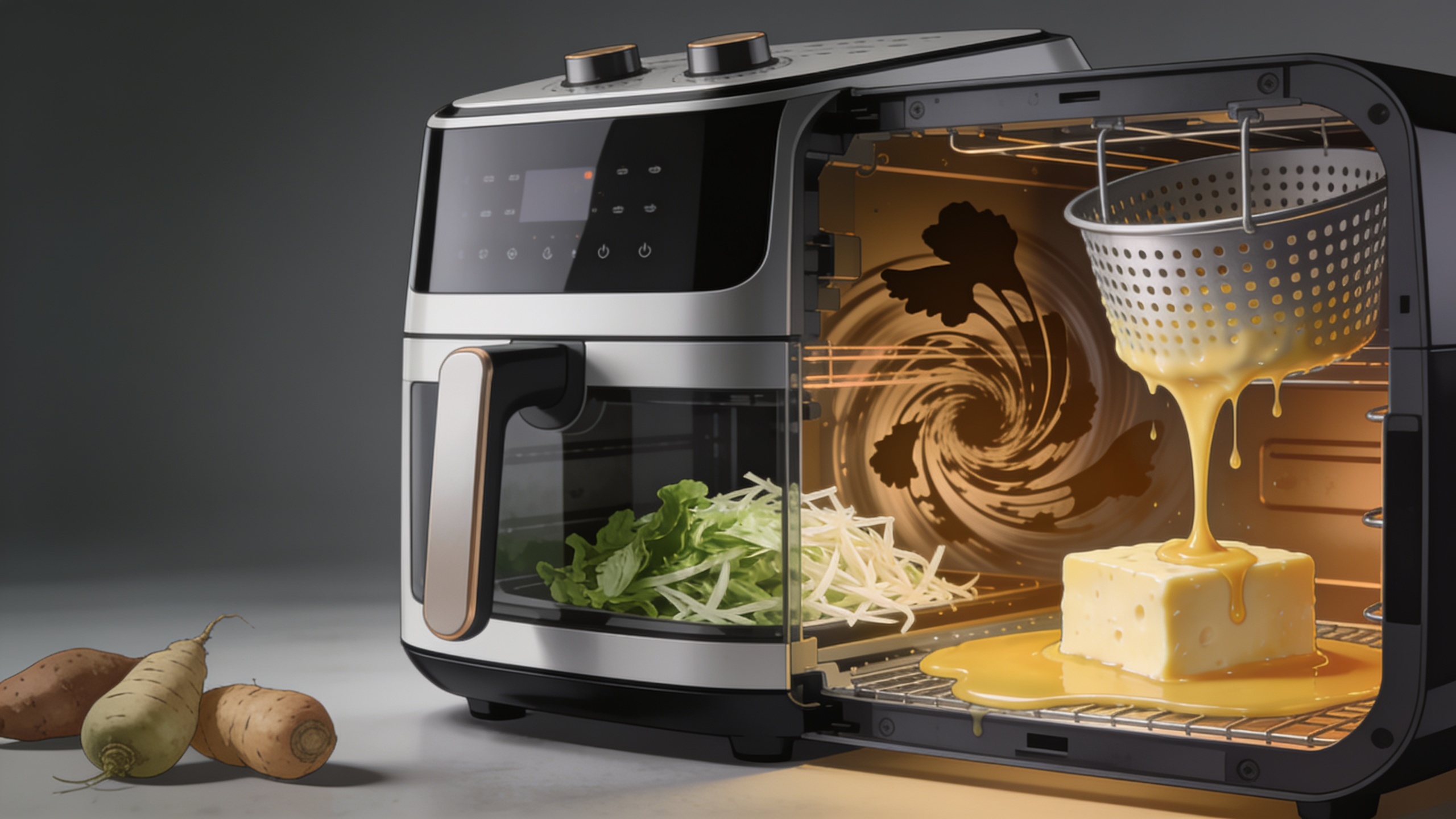
Loose, melty cheese dishes like a plain cheese quesadilla laid flat, or an unstructured mac and cheese, tend to melt straight through the basket holes. The cheese pools at the bottom, burns, and creates a mess that’s brutal to clean. If you’re air frying anything cheese-heavy, use a liner, a small oven-safe dish, or make sure the cheese is contained inside something like a wrapped pastry.
Whole Roasts and Large Cuts of Meat
Air fryers are compact by design, and that’s the whole point. But it means large roasts, whole chickens over five pounds, or thick prime rib cuts struggle to cook evenly. The outside will be deeply browned, sometimes burnt, while the center stays undercooked.
I tested this with a 6-pound chicken in my Ninja air fryer once. The skin looked perfect at the 35-minute mark, but the internal temperature near the bone was still under 140°F. I had to finish it in a conventional oven anyway, which defeated the purpose.
Stick to cuts under 3 to 4 pounds for consistent results. Anything bigger belongs in a real oven or on a smoker.
Foods That Need a Lot of Space Around Them
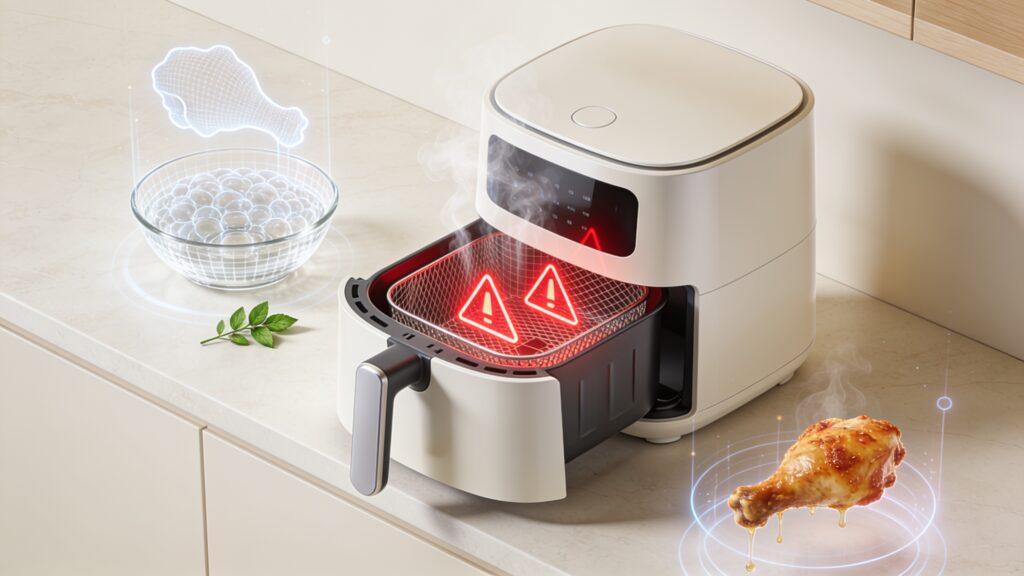
Air fryers cook through convection, and convection needs airflow around every surface of the food. Overcrowding the basket is one of the most common mistakes home cooks make, and certain foods are especially unforgiving about it.
- Whole grains like rice or quinoa, which need submersion in liquid, not hot air
- Popcorn kernels, which fly around uncontrolled and can hit the heating element
- Cheese curds or shredded cheese cooked directly without breading
- Fresh herbs left uncovered, which incinerate in seconds
- Burgers with a high fat content, which render out a huge amount of grease that pools and smokes
Each of these has a physical reason it fails. Rice needs to absorb liquid, not lose it. Popcorn needs oil bath contact or a sealed environment. Loose cheese has no structure once it melts. Herbs are too thin to survive direct heat exposure. Fatty burgers create a grease hazard that a wider oven tray handles far better.
Foods That Release Too Much Smoke
Fatty meats like bacon, sausages with high fat content, and marbled steaks can trigger smoke way faster in an air fryer than in an oven. The compact chamber traps rendered fat near the heating coil, and it starts smoking well before the meat is done.
| Food Type | Problem | Better Method |
|---|---|---|
| Wet-battered fish | Batter falls off, sticks to basket | Deep fry or pan fry |
| Leafy greens | Fan blows them into the element | Bake at low temp on a tray |
| Soups and stews | Liquid leaks through basket | Stovetop or microwave |
| Whole large roasts | Uneven cooking, burnt exterior | Conventional oven |
| Loose shredded cheese | Melts through holes, burns | Oven-safe dish or liner |
| Popcorn kernels | Fly loose, hit heating element | Stovetop or microwave |
| High-fat sausages | Excess smoke from rendered fat | Oven or grill with drip tray |
A Few Household-Specific Warnings
If you live in a small apartment with a sensitive smoke detector, be extra cautious with fatty meats and cheese. I learned this the hard way in a rental with paper-thin walls, setting off the smoke alarm at 9 p.m. trying to air fry chorizo.
Also skip anything wrapped in parchment paper that isn’t weighed down. Loose parchment gets sucked into the fan and can scorch or even catch fire in some models. Always anchor paper liners with the food itself or a small oven-safe dish on top.
Key Takeaways
Air fryers are fantastic for crisping, reheating, and cooking small to medium portions of food with dry coatings. They struggle with liquid, wet batter, delicate greens, oversized cuts, and anything that needs full submersion to cook properly. Respect what the appliance is built for, and it’ll reward you with consistently great results.
Before you toss something in the basket, ask yourself if it has excess liquid, a wet coating, or enough mass to cook evenly in a compact chamber. If the answer raises a red flag, reach for your oven or stovetop instead. Your air fryer, and your smoke detector, will thank you.